
You can find Gerardo Marciano—devoted organizer for housing, migrant, queer, and racial justice—shutting down streets in solidarity with Palestinians, helping to Free Heartland Kids, sharing community and vital supplies with unhoused neighbors and asylum seekers through Food Not Bombs, or keeping the Rogers Park Free Store open week after week. Here, in conversation with Andrew Holter, he offers a preview of the fascinating stories in his forthcoming memoir, Queer Boy Magik. (Trigger Warning: Abrupt mentions of sexual violence and suicide)
Why don’t you introduce yourself?
My name is Gerardo Marciano. I was born on April 26, 1969, the youngest of thirteen brothers and sisters, in Mexico City. That’s where I grew up until I was nineteen. Then I moved to this country.
What was it like growing up in Mexico City in the ’70s?
I was raised outside the city. And when I say outside, it was two blocks away from city limits, basically. The neighborhood is called Nezahualcóyotl—that word is Nahuatl, and it means hungry wolf. It’s also the name of an Aztec ruler.
Politically, there was a lot of tension. I grew up in the remains of the 1968 Tlatelolco atmosphere. My brothers, some of them, were radicalized, and some of them were socialists and communists. So I grew up around that idea of communism and the threat of the government and the way it treated the people.
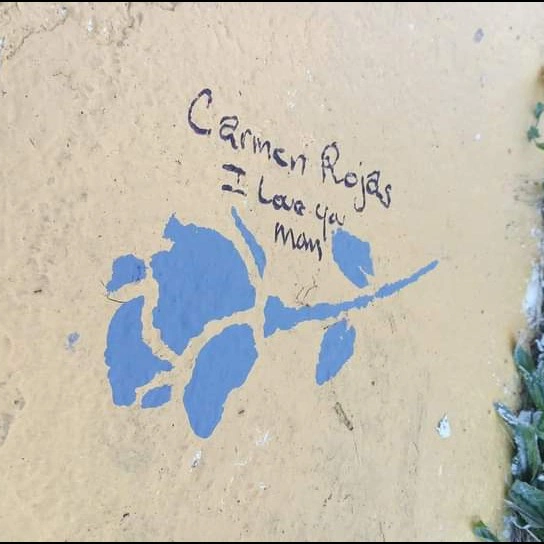
And my mom, Carmen Rojas, was an organizer, an activist. She introduced me to the belief in advancing the human spirit. She would do whatever was in her power to make sure that everybody grew up equally and with food on their plate. We were very poor, but neighbors would send their kids to our house with an empty bottle so we could fill it up with milk, and they would send kids to play with us at dinner time so the kids could get fed as well. Nobody was ever turned away. If we didn’t have a full glass of milk we’d have half a glass of milk so that everybody got fed.
Your mom was a neighborhood figure. People knew who she was on the street and in the community. She had some connections to local politics, too, didn’t she?
Yes, she did. She also was a provider of a lot of jobs. She was a seamstress and then she took on other jobs. To get the company going, she bought about a dozen sewing machines on layaway, and shifts of people would come out to our house and work, twenty-four hours a day. And my brothers would work at night after they came back from school.
Later on, in the early ’80s, she took up bordado, embroidery, with sequins and stuff, which was popular back then. She would get extra materials and give them out to the neighbors so they could work, as well. These orders would have to be filled fast. Sometimes it would be over the weekend—like a wedding dress or a quinceanera dress where the whole dress needed to be embroidered. So she would ask neighbors to come and they would go all night long.
She worked a lot.
She was busy most of the time. The house was always packed. It was always full of kids and family and people coming to work. And we had a lot of people living there. She let the brothers of my brother-in-law from Guanajuato come live with us while they were studying in Mexico City. To me, they were family.
That was the kind of behavioral knowledge that I saw from the beginning—how my mom and my family took care of a lot of people. The openness of the house. I thought the workers were my cousins. To me, they were all family. They took care of me as well; they loved me, and they would come to my birthday parties. And then as a teenager, when I started doing drugs and alcohol, these people took care of me. When they would see me walking on the street at four in the morning, they would make sure that I got home.
Most of the workers were neighbors. But at that time in my neighborhood, there was a house here, there—there was a church and a market. That was it. There truly was nothing to do. There were no roads. There were no sidewalks. It was gravel and mountains. In front of my house there was a river where you could fish! It was very poor. Garbage on the ground, rocks, gravel. It was a nightmare just to walk to the market and come back with heavy bags of groceries.
Was the church important in your life?
Yes. Because there was nothing else to do, all the youth would go to the church and play in estudiantinas. That’s a tradition from Spain where they form groups of people with guitars and mandolins and sing in the church. My sister was the secretary of the church. My brothers and I would sing Sunday Mass dressed up with capes and berets, and then we would go busking on buses or in Chapultepec Park to make money to buy treats.
The pastor of one church in my neighborhood had a brand new Renault, which surprised me. And two German Shepherds that he taught to attack people if they wanted to rob the church. And—a rifle, which he used several times! To me, that was the opposite of what the Bible and the teachings of the church were saying.
My mom had a nice table cover, and sometimes when there was a wedding, the priest would ask my mom to bring it to decorate the altar. And my mom would clean his house, clean the church, and send him food. He would come to my house for dinner, for weddings, or quinceaneras. And because my sister kept being the secretary, we kept singing in church. I would swing the incense or sound the bell. To this day I find it hilarious that I did that.
When did you feel like you became politically conscious?
As a young boy, I mean, just hearing my brothers, my whole family talk about politics, the church, the neighborhood—you don’t have a choice but to get that knowledge and wonder things. And because we were such a big family, everybody’s got their different political affiliation, different thoughts about the church, for example. So not everybody was in favor of the pastor coming to the house! There were always arguments, there were always fights—even physical fights.
As a young person I asked a lot of questions all the time. I would rather sit there and watch that debate than go play or do whatever my nephews and nieces or other brothers were doing. I had no interest in riding a bicycle. I had no interest in learning how to skate. I had no interest in watching TV or movies. I was more interested in reading books. In my house, there were lots of books everywhere.
We had dictionaries. Encyclopedias. Poems. There was practically a little library in every room. There were books in the kitchen. There were books about everything. My siblings also subscribed to Reader’s Digest, and they would all read a section and discuss it on Saturday night. And I would be like, “I want to know more. I want to read that.”
It was prohibited to talk about about Tlatelolco in Mexico for a lot of years, until the movie Rojo Amanecer came out in the late ’80s. My siblings and I were discussing Tlatelolco, and they said we have a book here by Elena Poniatowska. They said, “Read this book if you want to know more.” In the book, there’s a section with pictures. There was a picture of some guys with long hair, and one of my siblings said, “Do you recognize this?” And I said no. And he was like, “That’s us!” With a bayonet pointing at them.
That brought a bunch of questions to my mind: Why were you there? Why were they pointing a gun at you? Are you a criminal? They would answer all those questions, which brought more questions. And then I read the book.
Reading for myself has taught me about how the government manipulated people and how easily they can kill you. And how people in the Mexican government were like chess pieces moved by the American government and the CIA. And how the media in Mexico has played a big part in convincing people that nothing happened. That there were communists trying to overthrow the government instead of just students and seamstresses and trade workers fighting for their rights because they saw a big opportunity: the Olympics were going to happen soon. Mexico City was going to be the focus of the world. All the unions and syndicates wanted to show the world the corruption that Mexico was living in.
There’s a well-known saying, “Poor Mexico, so far from God, and so close to the United States.” The United States had a hand in all the decisions that were happening. As we know now, the American government was very afraid of uprisings around the Civil Rights Movement here in the ’60s and were afraid of another country joining in that fight or overthrowing the Mexican government. And I saw that in talking with my brothers and reading books; I saw that in documentaries.
I started seeing the world in a different way.
In the eighties we saw a lot of refugees arriving from Nicaragua and El Salvador. A lot of people ran away from the civil wars that were happening there. My brothers welcomed the refugees, and some of my brothers were friends with them. But I saw people throw rocks at them on the streets because the media was saying Sendero Luminoso or the Guerrilla Nicaraguense were no good and they were going to come and bring communism to Mexico.
To me, it was unfortunate to see my people—my neighbors, my friends—do that to other humans, to people trying to run away from desperation. It made me an outsider among friends, but also it made me an advocate for humans and the suffering of humans. Most of the time, if not all the time, I went through it in silence by myself.
So it felt like a fight within me, by myself. My brothers insisted on talking about all those feelings and thoughts. They made themselves open to the dialogue, and there was no shortage of talking about socialism and communism and Octavio Paz, Garcia Marquez, the CIA, Pablo Neruda, Frida Kahlo, Dr. Atl, whose real name was Gerardo Murillo and who wrote one of my favorite poems about racism.
But I also knew that I was queer. I never hid my identity, but I knew the feeling of having to hide who you were. There was a little bit of homophobia in the family. Not openly, but my family would make fun of gay people on TV and things like that.
Then I saw something that my mom did. In Mexico, if you don’t get a diploma at the end of sixth grade—from what we call primaria or elementary—you don’t go to seventh grade. The principal of the school I was going to would sell the diplomas to the families of students who weren’t going to pass. She sold my brother’s diploma to someone else—and there was no way any of my brothers would ever not pass. They’re all pretty smart. Two of my brothers were going into seventh grade, so the principal just decided to give a diploma to one of them and not the other. My mom was pretty upset. She started making trouble with the principal.
There was a young education official, Porfirio Muñoz Ledo. My mom would go to him to try and get my brother a certificate. It went on and on. It took like, a year—he lost one year of schooling because of it. But also because of that, this guy, Muñoz Ledo, fought together with my mom to fix that problem not just for my brother.
He went on to introduce more rules and regulations to the schools, certainly to my school. The principal got fired, and they saw how much money she had been taking for all these years. My mom was put into the board of the school. The school didn’t have a lot of money, so she was in charge of getting resources for the school.
So I saw she not only got things for my brother, but she kicked out the bad people. She restored justice not only at my school but, because of Muñoz Ledo’s legislation he created, across Mexico City and the whole country. I saw that it pays to advocate, to fight.
That young politician became a powerful congressperson and then became Speaker of the House. And he passed away last year. He did a lot of good things to combat corruption. He was part of the system, sure, but he did help to fix things.
And that was a lesson for you.
That was a big lesson for me. My mom played a big role in my school, and I was very proud. She was proud too. She will have health problems soon after that time, and looking back today I know that was one of the proudest moments of her life.
But then September 19, 1985, happened. That was the big earthquake in Mexico City—so all schooling, all life, was interrupted. Thirty-five thousand people died. The government says three thousand, but we all know that many thousand more died.
What do you remember about the way people interacted with each other after the earthquake?
I often skipped school and wandered around Mexico City. And I fell in love with the history and the monuments and the palaces and the buildings. My mom and I would walk for hours and hours downtown. That’s where I studied ballet and got one of my first kisses.
So, the earthquake affected me very deeply. I saw my city get destroyed. We had never seen anything like it. A bunch of buildings came down. No one had electricity for two days, and there was no water for three months. It’s not something you imagine is going to happen to your city or to your people.

With the ineptitude of the Mexican government, people stepped up. People removed the rocks with their own hands, buried the dead with their own hands. There were people cooking food for everybody. And there were workers, including some of my brothers, who went downtown to help out and stayed there for days because there was no way to come back to your house. There was no transportation. I remember Nancy Reagan going to see the devastation and offering help, and the Mexican government refusing all aid from everybody, really, in the world.
Why?
Because “everything was fine.” Raúl Velasco had one of the biggest shows in Latin America for three or four hours every Sunday. He was part of the system, part of the government through Televisa. I remember him standing on a wall and saying, “Mexico is fine. We’re fine. Nothing happened. People are exaggerating. Look, this wall is up.” And this was broadcast around the world. The government and media were manipulating the situation.
I went back downtown months later to tour the city. There were lots of buildings with braces to hold them up, and we could hear little stones still falling through the buildings.
I remember being at home the day that it happened. We were trying to shield ourselves from all the bad news because all my brothers worked downtown, and the earthquake hit at 7:19 AM. There was no electricity, but we had a radio powered by batteries, so we were listening to that, and the reports were as devastating as images. My mom said, “Everybody is going to come to the house, so let’s start cooking.” She made a bunch of chicken and a bunch of rice, and all my brothers and their friends and workers and their families came over, and everybody got fed. Until the day she died, she never knew how she fed that many people.
When my family moved to the neighborhood, they found the water line and made a hole so that people in the neighborhood could get water. And decades later, when the earthquake happened, they went back and found the same hole and opened it up so everyone could have water again. People were filling buckets, and they were making a line.
My family congregated at my house to save water and food and for security. Some guys came around to sell water from a big truck, and my mom said that if we got the water right away, everybody would want to come around and steal it, so we were going to do it at two in the morning. She organized a way to wash clothes and dishes and take showers but still save some water. Then she said, “Knock on that person’s door and that person’s door and the old person’s door and ask them to bring buckets and pans so they can get water.”
So she was always thinking about other people.
Always, especially the older folks and the lonely.
And people started stepping up in ways that we had never seen before. One of the images that’s engraved in my memory is watching these high school girls. You had to wear a uniform at secondaria, a green sweater and white shirt, and they were making bandages out of their blouses. It was a circle of girls, like thirteen-, fourteen-year-old girls, making gauze bandages they could give to people. I tear up every time I remember that image. It is an image of what solidarity looks like, what taking care of each other looks like.
You don’t need a microphone or a megaphone to make change. It helps but you don’t need them. Your actions, in complete silence, can have an effect in someone else’s life. It’s something that I apply to my everyday life to this day.
I believe to this day, because I love Mexico City and its inhabitants, everybody changed. You would get onto the bus and say good morning to everybody and you would greet everybody. People would openly hug each other, get up and share the seat with other people. It was nicer, kinder, because I think we all saw the possibilities of being nicer to our neighbors, nicer to other people and how quickly you could die.
It was a kinder Mexico City. No pushing, no screaming.
There were these powerful moments in your political education—learning about Tlatelolco; witnessing the mutual aid work that your mother and other people were doing after the earthquake; getting this kind of radical education in high school. How did being queer fit into the picture? This was a time and place—Mexico City in the mid-eighties—when it was not very safe for young people to be out.
I never really came out. I have always been me. It was always clear to me that I was different, that I was gay or homosexual. In looking for attention at home or at school, I started to shave my eyebrows and wear eyeliner and curl my eyelashes, just to get a reaction from my family. It never occurred to me that I was going to get in trouble in school.
In Mexico, every Monday we have to dress in white to honor the flag and sing the national anthem. We do a pledge to the flag. And there would be a little speech from the principal and maybe a little theater performance about how great Mexico is.
So this one Monday the principal announced, “Everybody come down, we’re going to have a ceremony.” So while everybody was walking down, I decided to play around and not pay attention to the principal.
And the principal knew me by first name and last name. So he was calling me, and I was turning my back to him, pretending not to hear, kind of yawning in an exaggerated way, like I was falling asleep. Everybody was laughing—all the seven or eight hundred kids lined up on the patio, all of them making a big square, were laughing about it. The principal was getting very upset. “Gerardo, come down right now!” I decided to come down.
And while I was laughing to myself on the way down, I started hearing this noise. I heard the loudest, most nauseating chant—seven hundred kids chanting “Pu-to, pu-to.” Puto is “faggot” in Spanish. I froze. Cold went from the tips of my fingers all the way through my body. I felt like crying, vomiting. I didn’t know what to do.
I told myself, “You got two options, kid.” Because I was 14. “You can run away forever, or you can face everybody and hope that they will leave you alone.” I put my hands on my waist and walked diagonally through the whole big square like the proud queer that I am.
By the middle of the square, people were calling and shouting obscenities. So I put my hand up and waved like a queen, and the chanting changed into laughter and cheers. In the distance I could see the principal with his white button-up shirt, open-mouthed and looking at me. I finished my walk all the way up to the teacher. I had tears in my eyes. He looked at me and hugged me and whispered in my ear, “That’s the bravest thing I’ve ever seen.” That was my coming out. And since that day, nobody has ever called me names. Not to my face, anyway.
Tell me about when you started organizing.
In 1986, I moved from school to school. At this new school, I met this cute boy who was living half the time with a rich parent and the other half with a not-so-rich mother. He was living close to me over the weekends and the other days downtown, so he was friends with a lot of interesting people. We became boyfriends—my first real boyfriend—and he introduced me to a whole lot of politically aware people.
They were organizing an alternative to gay pride in Mexico City. There was already a Pride in Mexico City, a parade like we know here in America with corporate stuff. But these people wanted to organize a political, save-ourselves kind of Pride. My boyfriend invited me to an early planning meeting. There were less than twenty of us. One is now a senator from a socialist party; one became a famous drag queen; and one is a famous fashion designer in Mexico. The planning started right away. I didn’t know much. I didn’t know how to organize or what to expect or the dangers of it. At that time AIDS hadn’t really happened in Mexico, not as we know it.
AIDS wasn’t something you were thinking about.
We didn’t know the scope of what was going to happen. I knew somebody who lived on a street close to mine, the brother of one of my friends, who died from AIDS. In Mexico, when somebody dies it’s traditional to put a black ribbon outside the house to let people know that you’re in mourning. His family didn’t do that. They cremated his body right away, which in those days was unusual. There was no funeral or memorial. It was all hush-hush. We knew people would die from it, but we didn’t know the scope. It was not part of our fight then. Back then, with no Internet or cell phones, news would take time to travel. Our fight at that time was to be recognized and to be left alone, basically. If you wanted to dress “like a girl” or hold hands with your boyfriend, that’s what we were fighting for.
For that freedom to be yourselves.
At those meetings we talked about the struggle to be free. For example, I would be riding the train and be called names, get cat-called, things like that, because of the way I dressed at the time. I was taking ballet classes at that time so I had a nice body, and I would be touched all the time by men. We wanted to stop that. The area I was living in was dangerous, and if you dressed kind of fancy, cars would stop, people would get out and strip you naked and leave with your clothes. That was the struggle I was bringing to the meeting—for safety. I was harassed. Not in my neighborhood so much, because I knew people and had a lot of friends, but I would go to parties and people would tease me.
It felt good to be involved with my boyfriend, to be part of his world, and then to be involved in something greater than myself. I wasn’t thinking about changing the world or the lasting impact that we would have. I was thinking about spending time with him and spending time with the people that I connected with through those meetings.
And to some extent, I think I was trying to emulate my mom. Like, this is something that I could do to apply her teachings. To do something to help other people.
This organizing was happening very secretively. I remember a dark room. There was no drinking or drugs allowed. We would just talk and talk and talk, and share our dreams and our collective struggles. I have very fond memories of those meetings. Every now and then, in organizing in Chicago, I can see those meetings. When that happens, I’m like, “Oh, my God, these are those meetings that I used to love.” When everybody rises up together, when there’s not an instructor or somebody above you. We knew we were minorities within a very patriarchal, macho country.
Did you feel pressure to be macho?
There was pressure from family, from neighbors, from the whole country, the president, the senate, to be something that we were not. We didn’t have the freedom to express ourselves. There was pressure for me to take a girlfriend to the house, for example, even though my family all knew—they say now they knew—I was gay. There was still pressure from people to have a girlfriend. And luckily I’ve always had badass girlfriends.
I remember when George Michael was on TV, with his earring and leather jacket, he was called names. Even my family said, “Oh my God, why does he have to be gay?” The singer Juan Gabriel never came out, ever—he passed away and never came out. He would dance provocatively and sing songs that I loved. And you knew those songs were about men. He was admired by everybody, loved by everybody, but also heavily criticized.
And you started expressing yourself more and more through clothing at this time, didn’t you? Fashion was a big part of your life.
One day I decided to have blue hair with gray streaks in it. If people wanted to talk about me, they were going to talk. I started to rip my clothes and tie them up with laces and things like that. I would wear dark glasses all the time, pretending not to notice people noticing me. If I wore a button, the next weekend people will wear the button. When I was dancing, if I shook my hand in a wave, the next weekend people would shake their hands like that. People would ask me where the parties were, and they would expect me to show up differently every Saturday. So I would grow my hair long, or I would shave my head. . . . Once I dipped my hands in paint and walked around like that.
For shock, a little bit? But it was important.
To me it was important, and it was about the freedom to do what you want. I know now that some people looked up to me in those days, like I looked up to drag queens when I was little. There was a guy who was in love with me, who couldn’t express it until the day I left Mexico City. He said to me that he could never come out of the closet because of his family’s expectations. He became a drunk guy, basically, who would fight people to prove he was macho.
So that was what we were fighting for, that freedom that comes from making your hair blue or gluing butterflies to your sleeve, even if they last for one day because of the rain or whatever.
To this day I’ve never been anyone other than myself. I may tumble down, I may have insecurities. But when I think back, I haven’t been anybody but myself. That takes balls.
You could have ended up like the guy fighting people at the bar to prove he’s macho.
In my family, in my neighborhood, in the city, in the world, I always felt very alone. To survive, I knew that I needed to have friends. I knew community was the answer.
When I think about my inspirations, of course I think of my mom, Emiliano Zapata, Benito Juárez, Frida Kahlo, Juan José Arreola. And my friends. My friends that I organize with. My friends now are my inspiration. Some days—not every day, but some days—I look back and I am my own inspiration.
What about those drag queens you admired as a kid?
Before these meetings and actions we did, there weren’t a lot of people I could look up to. There was a group of six drag queens who were famous around my neighborhood. I felt so much jealousy in my heart when I would see them dance—they had boyfriends and walked around in high heels on the street, unpaved streets full of dirt and rocks. Being who they were. They were severely punished. People would spit on their faces.
One of them died of AIDS. We visited him in the hospital, which wouldn’t take care of him. They left him in the hall. I knew they were brave, just to live their lives.
That’s what we talked about at those meetings—our freedom, just the right to exist in a country that for all intents and purposes didn’t want to see you live! To this day, there are men in Mexico who sleep with gay people but don’t call themselves gay. In Mexico, as long as you’re the top, you’re not gay. You’re a man who is having sex with another man, but you’re not gay.
So how did those meetings about queer pride, queer liberation, turn into action?
For the first action that came out of those meetings, we wanted to go to a place called Zona Rosa in Mexico City. It’s a gay, upscale neighborhood sort of like Boystown. We had all these nightclubs in Zona Rosa but weren’t accepted by the business owners. My friend Tito he was a dancer who made enough money that he actually bought some clubs, but he was never accepted by the business association or by his family. Even his obituary doesn’t mention that he died from AIDS. It’s like that never happened to him. The truth erased from reality.

So we wanted to show that the business owners in Zona Rosa were making money from us but not accepting us or protecting us from the police or even from people just walking by, including tourists. Traditionally, Zona Rosa is a hub for male prostitution. So it wasn’t just a single restaurant or a nightclub or a McDonald’s—the whole neighborhood was gay, gay, gay, but then you’re not accepted! In those days you had to wear a tie and nice shoes to go into a club, you couldn’t wear sneakers, and that is something that we wanted to draw attention to.
We gathered at the Glorieta de Insurgentes. We were very afraid and didn’t know what was going to happen. Twenty people. We were going to walk around, just holding hands and probably kissing. No signs, no nothing. There was no afterward plan, it was just, “Survive.”
We made it all the way to Reforma avenue. It was harmful and painful. We would get bottles thrown at us, hot water on our faces. Stones. Screams and shouts. Even from gay people. We would be holding hands, and you could feel it become more forceful because we were afraid. We’d look at each other and try to calm down, making a smaller and smaller circle.
The first few times we did that, it was painfully heartbreaking. At the end we cried for a long time, holding each other.
We did it every Saturday for a month. The first time we were about twenty. The second time we were thirteen. But the third time we were almost fifty. I believe at first it got smaller because people were afraid, but then the same fear made folks invite their friends, so actions got bigger over time.
The rocks and bottles got worse. One time someone spit on me, in my face. We’d never shout or punch back. We just kept walking and holding hands. Sometimes we would stop and kiss. We never tried to get into one of those clubs.
Some people would come up to us and ask questions because they were interested in being a part of it. We had no address, no email. So we’d say, “Meet us here next time.”
Every time I go to a rally or a march and it starts, I get tears in my eyes remembering these days. We would form a circle holding hands and count off, and then at the end of the action we’d do the same thing and count ourselves to remind us that we survived and we were all safe.
So you did it every Saturday for some months and then what happened?
We were trying to get signatures for a petition to the government of Mexico City. I think since 1990-something there have been socialist politicians in Mexico City, but at that time there were none. We were very inexperienced, and people were just trying to survive. People were afraid, a lot of people dropped out. My boyfriend got afraid and moved to the United States without saying goodbye.
1985, 1986, those were the years everything happened to me. In 1987, my life stopped. I quit dance classes, quit going to school. I stopped going to these actions.
I was gang raped in my neighborhood.
My boyfriend moved away. My mom moved away, to Chicago, and everything stopped. My mental health was very bad. To the point of me trying to kill myself. I didn’t get involved in activism again until many years later, until I came to Chicago.
Gay life in Mexico City looks a lot different now, but that’s not the Mexico City you knew.
About six or seven years ago, I turned on the news and heard that there were 235,000 people that year marching in Pride in Mexico City. It shook me. It brought tears to my eyes. I thought about all those people who were there with me in those meetings and early marches. All the friends I have lost to AIDS and to hate—and I’ve lost a lot more friends to hate. And when I heard that on TV, I stood up, bowed my head and with tears in my eyes started counting to twenty, in honor of the twenty people who were there on that first Saturday.
When I came to Chicago, the first Pride I went to, I was with some friends from the Gay Liberation Network who invited me to hand out flyers about immigration. I was around forty years old. That was the first big Pride march I ever went to. And I marched and it felt good, it felt different. I don’t go anymore, but for me what was important was being able to march that day in favor of migrant justice and the idea that everyone is welcome.
As an immigrant, and as a queer person, that was important to me. I owed that to my ancestors. I wanted to be there for those who didn’t make it or who couldn’t make it because of homophobia, the people who are on the sidelines or don’t have the strength to march or to proclaim themselves. I wanted to be an example for others, to say, “If I can make it, if I can march here and hand out these flyers to a million people, as someone who grew up believing that I did not deserve love, if I’m here being myself, you can make it too.” To show that it was possible for anyone to get that love, to be in that community, and to do as much good as they can.
But that time in your life and those early experiences out in the street, they were important to you.
That time left a mark on me. We were not seasoned organizers, we were literally trying to live our lives—linking arms, making decisions then and there. All those things marked me. And so did the love of all the people marching with me. When people have asked me my political affiliation I’ve always said, “Surviving.” That surviving the way that I am is a political statement. As I write in the book, my biggest accomplishment is to have friends and be in community.
I think because of those days, because of that organizing and those marches, I became somebody there. I think it gave me a purpose. I realized that as a community, together, there’s a lot to get done. There’s no stupid questions or stupid answers in organizing meetings. All voices should be welcome, because my voice was welcomed, and I didn’t know what I was saying.
You were the new person in the group, once.
Yeah! That’s why I welcome new people with open arms, especially young people, because I was that person.
Now that I’m older—and not wiser!—I love when I see young people step up. It really brings a smile to my face. Now in Food Not Bombs, for example, when people raise their hand and say, “I can get this done,” or “I can bring this,” “I have a car we can use,” or “I can orient new people,” I text them to say thank you and that I appreciate what they are doing. I want them to feel welcome and I want them to continue to improve our future.
When I look in the mirror, sometimes I see a mess of a human being but what I try to see is the lives that I have touched. The extraordinary memories that I have made. The way I have made people feel by just existing, by just being me.
I do think that my time is coming to an end soon and I wish for young people to step up. I don’t think I’ve ever said this out loud, but I can say it now: Young people, it’s your turn. Take us there. Bring us to the future. Makes us proud.