A few weeks ago, I visited the Legler Regional Branch of the Chicago Public Library with my fiancé and my best friend. When I was ready to leave, I decided to stop by the men’s restroom on the way out, and was washing my hands when several men wearing Streets and Sans high-vis jackets entered. One of the gentlemen, a man who looked around my age, remarked to the man behind him, “Yeah I probably passed this place a hundred times, never knew it was a library. Thought it was a school.” After I dried my hands, we left the building, and lo and behold, the Streets and Sans garbage truck was parked directly in front of the library.
I’ve been coming back to that moment a lot recently, because I think it gets at something very deep and serious about how we interact with libraries.
In that moment, two different people walked past each other, like ships in the night, and engaged with the same public building in fundamentally different ways. One person planned out an intentional excursion to this building as part of a broader day of recreation, using it as both a rest stop and a destination of its own, traveling for over an hour via public transit and walking to get to this specific building. The other person was on the clock, and simply needed to use the restroom.
What do libraries do and who are libraries for?
It seems almost ridiculous to ask, but as libraries face budget crises, attacks from the far right, and the burden of handling so many of our society’s failures, it is increasingly important that all folks, especially those in the broader progressive movement, engage seriously with what libraries are, so we can embrace and fight for what they can become.
Chicago is home to one of the largest metropolitan library systems in the world.
I am not a librarian, nor have I studied library science. But I am someone who owes so much to the various public libraries I’ve used over the years. Public library resources and programming helped my parents assimilate to this country, they were an important part of my childhood, and they helped nurture my love for reading and learning. I am the generation of Arthur’s “having fun isn’t hard when you’ve got a library card”. When I moved to Chicago, I intentionally sought out a place within walking distance of two things: public transit and a public library.
Chicago is home to one of the largest metropolitan library systems in the world, with 81 branches that collectively hold over several million items for circulation. At least 2.5 million visitors have entered a CPL branch year to date. There is a CPL branch in each community area (except for O’Hare), three regional branches and a central branch downtown. This makes it an excellent vehicle for exploring how a library system does and could operate.
A little over a year ago, my fiance and I began trying to visit every single branch as a way to explore our city more, and this expedition has helped reveal both the beauty and the limits of our current library system. My hope is that by engaging with the system as it is, we can empower our communities to expound on the great emancipatory potentials within what lies around us.
How did we get here?
In the early years, Chicago’s public library system, established in 1873 after the Great Chicago Fire of 1871, was like most early American public library systems, centered around a main building downtown. CPL cycled through various locations downtown before the completion of their first permanent headquarters at Randolph and Michigan, which opened in 1897 (this building is now known as the Chicago Cultural Center). In 1900, Timothy Blackstone, rail magnate of the Chicago and Alton Railroad and founder of the Union Stock Yards, passed, and in his will he bequeathed land and money to create a library branch in his neighborhood of Kenwood. The Blackstone branch, which opened in 1904, remains to this day the oldest still standing CPL branch, and the only one built entirely with private money.
There should be a school, health clinic, child care center, park, and public transit stop within walking distance of every Chicagoan.
CPL took the form it currently has thanks to the innovative vision of a Polish immigrant named Henry Legler, who was Commissioner of the CPL from 1909 to 1917. Legler had previously worked for the Wisconsin Library Commission and had helped found a school for librarians that would go on to become the University of Wisconsin-Madison’s School of Library and Information Studies. In 1916, Legler published his groundbreaking “Library Plan for the Whole City”, which centered around a remarkably radical premise: every Chicagoan should be able to walk to a library branch. While this feels almost obvious to us today, it was unheard of at the time. He unfortunately passed away only a year later, but the plan lived on under the new Commissioner, Carl Roden, who oversaw the completion of the first of these planned neighborhood branches, the Henry Legler branch in West Garfield Park in 1920, which today sits on the National Registry of Historical Landmarks. In the coming decades, CPL opened dozens of branches, and by 1985, there were 76 branches across the city. In 2019, CPL opened its 81st branch in West Loop, and as of 2024, its planned 82nd branch, the Obama Presidential Center branch, is under construction and expected to be completed by 2026.
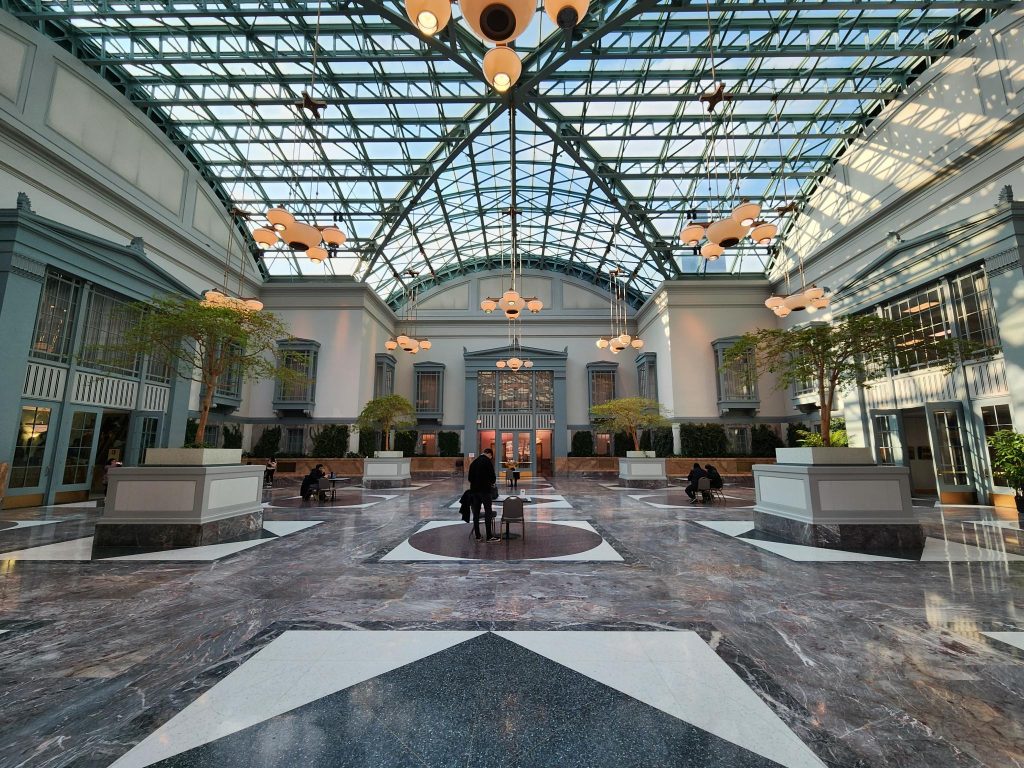
There is power in Legler’s bold but simple premise. While Chicago remains a deeply segregated and unequal city, ravaged by decades of neoliberal governance, we still have a CPL branch within walking distance of the overwhelming majority of Chicagoans. We can and should be willing to make similar demands of other public goods and services: there should be a school, health clinic, child care center, park, and public transit stop within walking distance of every Chicagoan. Imagine how much better our city would be, and the message it would send to our neighbors and to the world about our values.
What do our libraries do?

When most people think of a library, they think “a place with a lot of books”. While that is absolutely core to how they started (the word even comes from the Latin “liber”, meaning book), modern libraries are so much more than that. In addition to having books, the branches also have movies and music you can borrow (and as of 2019, you will no longer incur fines for late returns). Families can borrow free museum passes to visit many of the famous attractions in our city. During the summer, they have a limited selection of free tickets to the Ravinia Music Festival. There is programming and events citywide for all and every age, year round, 7 days a week. Almost every single branch has a dedicated kids area for children to play in, and many have teens areas. Most have large community rooms that can be reserved for local events. Some have seed libraries and community gardens. 29 branches are home to a YOUMedia space, a teen digital media learning space designed to encourage and empower youth to engage with digital arts (where a young Chance the Rapper got his start). Many of them have large collections of materials in other languages, as well as recent editions of newspapers. Most branches have Narcan available, and since the pandemic, many have given away free COVID tests. One branch, Legler, even has a staff mental health counselor from the Department of Public Health. Many of the branches also have historical displays that help inform visitors about the neighborhood and its story. The Woodson Regional branch is home to the largest African American historical archive in the Midwest.
Libraries help anchor and grow a sense of community. That’s why those who benefit from hyper-individualism want them gone.
There are also a great range of services offered at CPL branches. You can print up to 10 pages in black and white for free every day, and can pay to print more. Every branch has Wi-Fi and many have computers you can use to directly browse the Internet. Many are voting locations on Election Day.
And at its most simple level, the branches are enclosed public spaces. You can simply sit, and rest, and use the bathroom, within a climate controlled building during its open hours without needing to pay. The branches double as official heating and cooling centers during our (increasingly more common due to climate change) heat waves and cold snaps. These are features that don’t have to be unique to a library, as they could describe any public building. After all, they also describe our Park Districts’ fieldhouses. But those fieldhouses are not often located on busy main streets within our neighborhoods, and simply don’t see the same level of foot traffic that our library branches do.
What challenges do our libraries face?
It is precisely all of these services and opportunities that are made available through our libraries that make them a target for the forces of reaction and hate. Libraries are open, accessible spaces for public education and knowledge sharing, where folks of all ages and backgrounds can learn about themselves, their community, and the world. That is why fascists want to ban the books they hold, restrict the services offered, fire their unionized staff, and ultimately defund and shut them down. Libraries help anchor and grow a sense of community. That’s why those who benefit from hyper-individualism want them gone. Libraries help bring resources to the marginalized, which is why the corporate ruling class detest the services they provide. And finally, and most critically, libraries are a place of refuge for those that our “housing market” have made unhoused, and that is precisely why the forces that want to disappear and criminalize them want libraries gone.
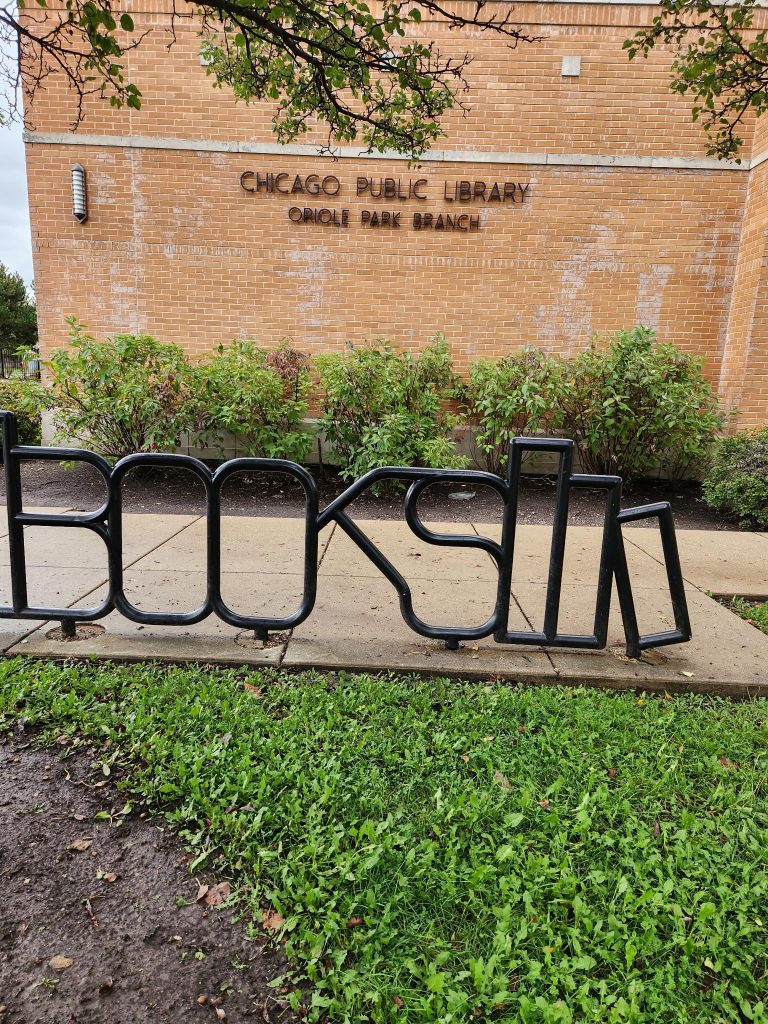
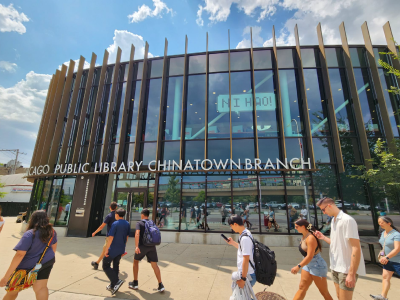
But it would be remiss to simply wax poetically about the CPL or libraries in general, without honestly struggling with the limitations they have. After all, they still exist within a broader neoliberal market economy, and within a city shaped by racist segregation. So while we do have branches in every neighborhood, how well maintained are they? When were they most recently renovated? How up to date is their collection? In my travels, I’ve seen an enormous disparity in the quality and size of both the branch and the material collection housed inside. Is the building a beautiful award-winning culturally-inclusive modern building that anchors a neighborhood (Chinatown), or is it a single floor flat building that is off to the side and easy to miss (Harold Bezazian)? Is it located on a busy throughway, near important neighborhood sites (Rudy Lozano), or is it hidden so far away from the main road you’d think you were never supposed to find it unless you knew to look for it (Oriole Park)? All of these factors influence if and how different communities engage with their library branches.
Librarians are often expected to handle the complex needs of society’s most vulnerable, all while also doing all of the other jobs expected of them, without any real help.
We also have to contend with the reality that our librarians are asked to go significantly beyond the scope of their daily jobs on a regular basis because our society refuses to treat both them and their patrons with dignity. Librarians across the country have complained about the lack of pay and benefits, outdated equipment and technology, and lack of stability in their workplaces. Librarians, especially in big cities, are often expected to regularly handle the complex needs of society’s most vulnerable, all while also doing all of the other jobs expected of them, without any real help. Our pages, clerks, and staff librarians are not trained social workers or mental health counselors, and it’s not fair to leave them with the difficult task of picking up the folks our society leaves behind. Patrons complain when books aren’t shelved and processed fast enough, but that’s hardly a fair ask when the staff are expected to watch over strangers’ children, help patrons with varying levels of English language fluency, de-escalate potential incidents, and deal with verbal and potentially physical harassment on a regular basis. There is also the complex role of private security in branches, something that some might argue is necessary, but others contend only makes folks feel unwelcome.
And while we all generally agree it’s good to create more public spaces, developing said space is always affected by the broader contexts of our time. Multiple branches (Blackstone, Hall, Pullman, and Legler) are in very old buildings that were donated or partially funded by wealthy businessmen from their era for publicity, and thus carry their names. While their old architecture is historically important, it also puts physical limits on programming and restricts the branch from growing. Today, the Chinatown branch sits as a shining jewel of the system, but it’s only there because community members fought for years to get the city to build a well-resourced local branch.
Three branches of the CPL (Northtown, Little Italy, and Independence) were recently chosen to be rebuilt with new modern designs in direct partnership with the Chicago Housing Authority (CHA). The first floor would be a CPL branch, the floors above would be CHA property (a creative public sector twist to the popular modern “mixed used first floor commercial / upper floors residential” style). Unfortunately, there are only a few dozen housing units built in each of these, and the majority are senior-only. Another round of branches (Humboldt Park, Back of the Yards, and Woodlawn) will be similarly rebuilt and co-located with housing, but that housing will be run by affordable housing non-profits, not the CHA. This happened in part because of neighborhood opposition to building CHA property above the library, which speaks to the complex political tensions enmeshed in advocating for more public amenities.
Who benefits from a library?
There is also a very insidious and concerning trend that worries me with libraries that has gone largely unnoticed: how libraries can become a political bargaining chip, a weapon of the ruling class to placate folks with a small, treasured, material concession as the rug is pulled out from under the broader public. There have been multiple instances of this occurring in Chicago in recent memory.
In 1987, Jerry Reinsdorf, the billionaire owner of the White Sox and Bulls, wanted a new stadium for the Bulls. He knew he had to mollify a public that was furious with the massive state taxpayer handout he had just engineered for the new White Sox stadium (which is still being paid off by taking revenue generated from the city’s hotel tax). So, he famously committed to not taking public dollars to build the stadium, and even met some of the demands from local residents for local investments. As part of the community benefits agreement (CBA) they signed, Reinsdorf and the Bulls donated several million dollars to help build a new public park, renovate CHA’s nearby Henry Horner Homes site, support local schools and youth programming, and, of course, help build a new CPL branch, named after the local organizer, Mabel Manning, who helped secure the CBA. While at the time this was heralded by some as the ideal municipal stadium deal, the shine wears off upon closer inspection, as detailed in Sean Dinces’ Bulls Markets: Chicago’s Basketball Business and the New Inequality. While it is true that no direct public money was spent to build the United Center, millions of dollars of public money were still spent on local infrastructure improvements, but notably, not a new CTA station, so that folks would have to drive and park at the parking lots Reinsdorf and his colleagues owned. Yes, they gave a few million in one time donations to the city, but the byzantine series of city, county, and state tax loopholes and exemptions they engineered for their stadium have cost us collectively hundreds of millions of dollars since then.
CPL is just one of many city agencies that could benefit from the hundreds of millions of dollars of already paid tax money currently sitting in TIF district accounts across the city.
In the 1990s, under Mayor Richard M. Daley, the city embarked on a massive campaign to rebuild and renovate the vast majority of CPL branches citywide. At least 60 of the branches were directly impacted by this effort. But just as Mayor Daley was lauding the value of neighborhood libraries and passing capital bonds to finance constructing new, more modern branches, he went on a frenzy creating TIF (Tax Increment Finance) districts across the city. TIFs are a notorious tool of the corporate class in Chicago that siphon off property tax revenue growth into accounts that are supposed to be used for large scale public infrastructure investments; in reality, they are slush funds for whatever the corporate ruling class needs. Because a TIF grows when a region generates more property tax over time, they directly steal money that would have otherwise gone to the various public services that are funded primarily by property taxes: schools, parks, and, as you can imagine, libraries. Just as many neighborhoods were getting new modern library branches, the ability of their library to stay up to date and continue to grow was being directly taken away without most folks realizing it. CPL is just one of many city agencies and departments that could benefit from the many hundreds of millions of dollars of already paid tax money currently sitting in over 100 different TIF district accounts across the city.
The most recently opened branch, West Loop, only exists because Sterling Bay donated one of their office buildings in West Loop to build it, as part of their PR campaign to convince City Council to give them a $1.3 Billion TIF handout to build their “Lincoln Yards” mega-project. It certainly didn’t hurt, as one of the last actions taken by Mayor Emanuel before he left office was to get a lame duck City Council to approve the TIF handout. The Lincoln Yards mega project has proven to be a massive boondoggle, as almost 5 years later, most of it remains unfinished, and the developers have returned, hat in hand, seeking additional funds to complete the project. Who knows, maybe they’ll propose a new “Lincoln Yards” CPL branch to try to pull the wool over our eyes again.
And while it is exciting to hear we’re getting an 82nd branch, and that it will be on the South Side, it’s bittersweet: the branch will be on the Obama Presidential Center campus. The OPC only exists because a sizable chunk of an already existing public space, Jackson Park, was taken from the community and given away to a private non-profit. The development of this campus has been highly controversial, directly leading to rapid gentrification in the surrounding area before its completion. The Obama Foundation refused to sign a CBA before beginning construction, were dismissive of the community’s concerns early on, and the CBA continues to be stymied by some local politicians, even as local voters have repeatedly shown at the ballot box that they want a CBA. A new public library is great, but who will end up benefiting the most from it?
What can become of our libraries?
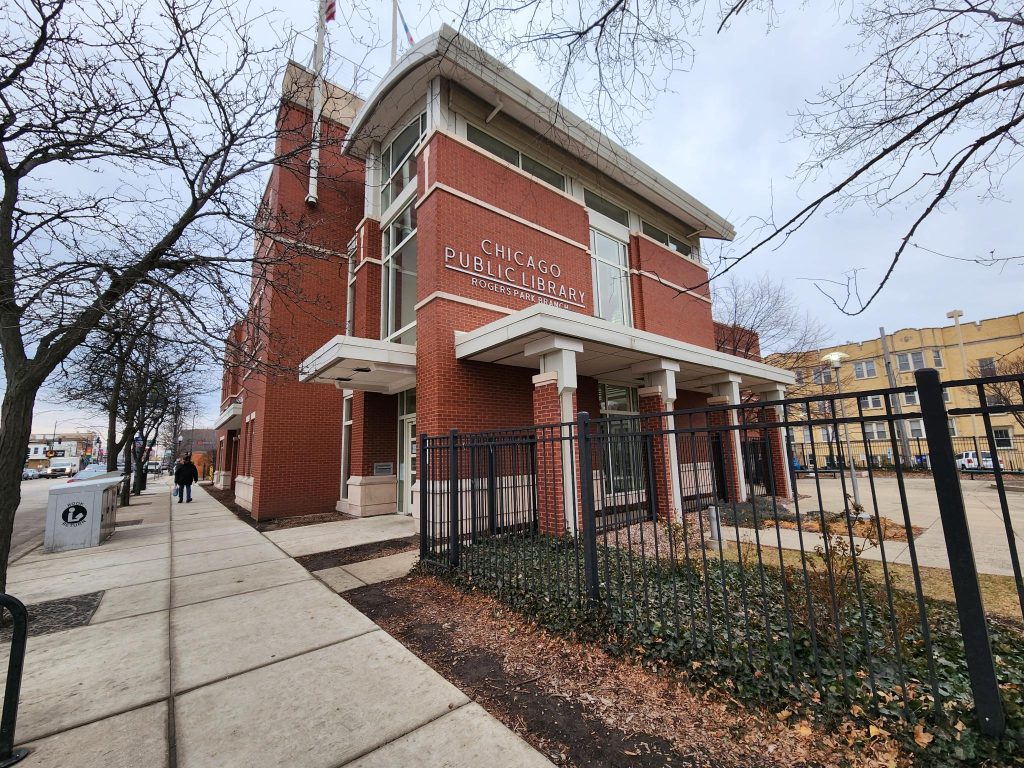
Libraries are an important part of our communities. Defending them is increasingly necessary as the far right mobilizes to attack and destroy this last remaining publicly funded enclosed third space. We can see the values and priorities of a city through its library system. But we shouldn’t romanticize them, either, because libraries aren’t this idyllic silent space of reading and books as they are often portrayed in the media. As a frequent patron of the Rogers Park branch, I love how lively and vibrant it is, often full of everyone from young children playing Minecraft on the computers to older folks sitting quietly and reading the newspaper. A library shouldn’t be a hallowed hall of books, it should be a reflection of its neighborhood. It should lift up and enrich the lives of everyone, not only through its material collection, but also through its programming, architecture, and location.
Libraries empower us to educate ourselves and to educate one another. They encourage us to be in community with one another. In an increasingly isolated world, that is such a precious thing that we cannot afford to lose. As Mariame Kaba has articulated before, I fear that if we lose libraries, we may never be able to get them back. But we also have to be vigilant in protecting not just the physical space they occupy and utilize, but the people and communities they are supposed to be living and breathing in. The patrons of a library should be there because they want to be, not because they have to be. We should be thankful, but also unsatisfied, with the fact that so many of our most marginalized find refuge inside a library. And we must never let our love of libraries be weaponized by the forces of capital to steal our futures away from us. What good is a space for some if it comes at the expense of the well being of all?
I believe thoroughly that a better world is possible, necessary, and on the horizon. And I hear her breathing the loudest when I’m inside of a library. Let’s work to make sure the breaths get stronger.